
Loading...
Serving Sugar Land, TX and surrounding areas. (281) 203-5105
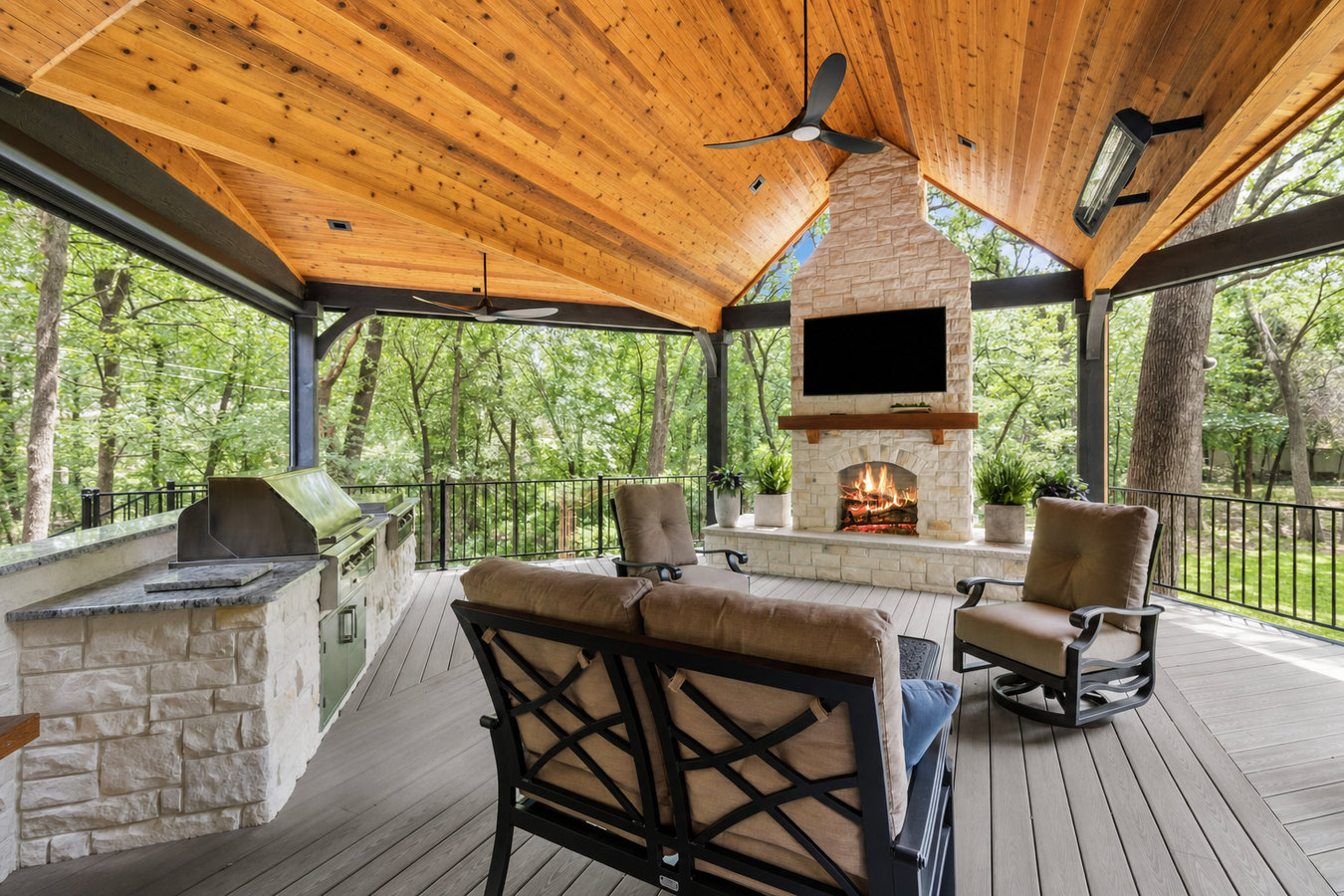
Sugar Land summers are long and brutal. We build insulated covered decks and patio covers that keep the space genuinely cool, handle the city permit and HOA paperwork, and anchor the structure for Fort Bend County clay soil.
Covered decks and patio covers in Sugar Land are permanent roof structures built over an outdoor living space - attached to your home or freestanding - that block sun, rain, and debris so you can use your backyard year-round, with most projects completed in one to three weeks of construction once permits are approved.
In Sugar Land's climate, an uncovered patio is essentially unusable from late May through September. The combination of direct sun, humidity, and afternoon temperatures that regularly top 95 degrees makes even a shaded spot uncomfortable without an overhead structure. A properly insulated covered deck changes that. It drops the perceived temperature by a meaningful margin, protects your furniture from Sugar Land's heavy rain season - averaging around 50 inches a year - and gives you a space you can commit to using regardless of the forecast.
If you also want to enclose the space and keep mosquitoes out, our screened-in porches and screened decks service can be built alongside or in place of a covered structure. For a more open-air shade option with a decorative look, our pergola installation service is a popular choice for homeowners who want overhead structure without a full solid roof.
If you step outside in the afternoon and immediately retreat because of the heat, your outdoor space is not working for you. Sugar Land summers are long and intense, and an uncovered patio offers almost no relief from direct sun. A covered structure with insulated roofing can make your backyard genuinely usable again during the months you are currently avoiding it.
If you are replacing cushions every year or dragging furniture inside every time a storm rolls through, that is a sign your outdoor space needs protection. The Houston area's combination of intense UV and frequent heavy rain is unusually hard on outdoor furnishings. A solid cover extends the life of everything underneath it and eliminates the scramble before every storm.
If you have hosted a backyard gathering and had to cancel or move inside because of weather, a covered space solves that problem. Sugar Land's afternoon thunderstorms - common from spring through fall - make an uncovered patio an unreliable venue. A covered deck gives you a space you can commit to using regardless of the forecast.
If your concrete patio is stained, faded, or cracked from years of direct sun and rain exposure, adding a cover now prevents further deterioration. Covered concrete lasts significantly longer than exposed concrete in this climate because it is protected from Sugar Land's intense UV and from the occasional hard freezes that can cause surface damage in Fort Bend County winters.
Every covered deck or patio cover project starts with a site visit where we measure the space, assess how the cover will attach to your home, and talk through your options for size, roofing material, and features like ceiling fans or lighting. We discuss your porch's orientation before finalizing the design - because in Sugar Land, a west-facing cover with the wrong roofing material will still feel like an oven in the afternoon. We handle the city permit application with Sugar Land Development Services and manage the HOA architectural review submission if your neighborhood requires it.
We build both attached and freestanding covered structures. For homeowners who want bug protection in addition to shade and rain coverage, our screened-in porches and screened decks team can combine the covered structure with mesh screening in the same project. Homeowners looking for something more open with a decorative structure should also consider our pergola installation option, which works well on larger lots where full coverage is not the goal.
Best for homeowners whose top priority is keeping the covered space genuinely cool - foam-core insulated panels block heat from radiating down, which makes a real difference in Sugar Land's afternoon heat.
Best for homeowners who want the covered addition to blend seamlessly with their existing home - shingle roofing matches the main roof for a clean, consistent look across the back of the house.
Best for homeowners who want direct covered access from their home to the outdoor space - the roof ties into the existing structure, creating a sheltered walkout area directly off the back door.
Best for homeowners who want overhead coverage in a specific yard area away from the house - pool surrounds, garden seating areas, or outdoor kitchens that need shade and rain protection without tying into the home's roofline.
Sugar Land sits in Fort Bend County, where summer temperatures regularly climb above 95 degrees and the region averages over 200 sunny days per year. This means your patio cover needs to be designed specifically to block heat - not just rain. An uninsulated metal roof can actually make your outdoor space feel hotter by radiating heat downward. Asking your contractor about insulated roofing panels before signing a contract is one of the most important questions you can ask, and it is a question we address at every estimate visit. Sugar Land also receives around 50 inches of rain a year - nearly double the national average - and the cover needs to be properly pitched and drained to shed that volume of water without pooling or leaking at the attachment point to your home.
The heavy clay soil throughout Fort Bend County also affects how patio cover footings must be designed. The soil swells when wet and shrinks when dry, and a structure anchored in that ground without accounting for that movement will begin to tilt over time. We design footings to the depth needed for local soil conditions - not the national minimum. We build covered structures throughout Fort Bend County, including in Sienna Plantation and Katy, and we know the permit and HOA process in each of those communities. The U.S. Environmental Protection Agency's ENERGY STAR program provides guidance on how roof design and materials affect heat transfer - a factor that matters more in Sugar Land than in most of the country.
Reach out by phone or through our contact form. Briefly describe what you are looking for - the size you have in mind, whether you have an existing patio slab, and if you have any HOA requirements. We respond within one business day and do not need all the details before the first conversation.
We visit your home to measure the space, assess how the cover will attach to your house, and talk through your roofing options. This visit typically takes 30 to 60 minutes. You leave with a clear sense of what is possible, what it will cost, and a written quote you can compare against others.
Before any work begins, we submit plans to the City of Sugar Land for a building permit and, if you are in an HOA community, help you prepare the submission for architectural review. This step can take two to six weeks depending on the city's review queue and your HOA's process - we keep you updated on where things stand throughout.
Once permits are in hand, the crew pours footings, frames the posts and beams, applies roofing, and completes any electrical details like fans or lighting. A city inspector visits to confirm the structure was built according to the approved plans, then we do a final walkthrough with you to confirm everything is level, watertight, and finished to your satisfaction.
Free on-site estimate. We handle the city permit and HOA submission. Written quote with no pressure or commitment required.
(281) 203-5105Many contractors in the Houston area install corrugated metal roofing because it is the fastest option - not because it is the best for comfort. We explain the difference between insulated and non-insulated panels at every estimate visit, and we let you choose. A foam-core insulated panel roof makes your covered space noticeably cooler in Sugar Land's heat; a plain metal roof can make it worse.
Fort Bend County's heavy clay soil expands and contracts significantly with moisture changes - and a patio cover anchored with footings sized for average soil conditions will start to shift within a few years here. We size and depth our footings specifically for local ground conditions, which is one of the details that separates a cover that stays level for 20 years from one that starts to tilt.
We pull a city permit for every covered patio we build in Sugar Land - no exceptions. This means a city inspector independently reviews the finished structure before it is closed out. When you sell your home, the covered deck is on record as a permitted, inspected improvement - not a liability a buyer's inspector will flag.
We have completed covered patio projects in First Colony, Riverstone, Telfair, and other Sugar Land master-planned communities, and we know what each HOA review committee looks for in a submission. The North American Deck and Railing Association (NADRA) sets the industry standards we follow - which means HOA reviewers see documentation that matches what they expect from a qualified contractor.
These are not marketing claims - they are the specific details that determine whether your covered patio is still level, watertight, and trouble-free five years from now. Every job we take in Sugar Land is built to that standard, from the permit application to the final inspection.
Open-air overhead structures that add shade and visual interest without a full solid roof - an option for homeowners who want structure without complete weather enclosure.
Learn MoreMesh-enclosed outdoor spaces that add bug protection on top of shade and rain coverage - the next step up from a covered deck for Sugar Land homeowners dealing with mosquitoes.
Learn MoreSugar Land summers fill up fast - lock in your build date now before the permit queue and booking calendar back up.