
Loading...
Serving Sugar Land, TX and surrounding areas. (281) 203-5105
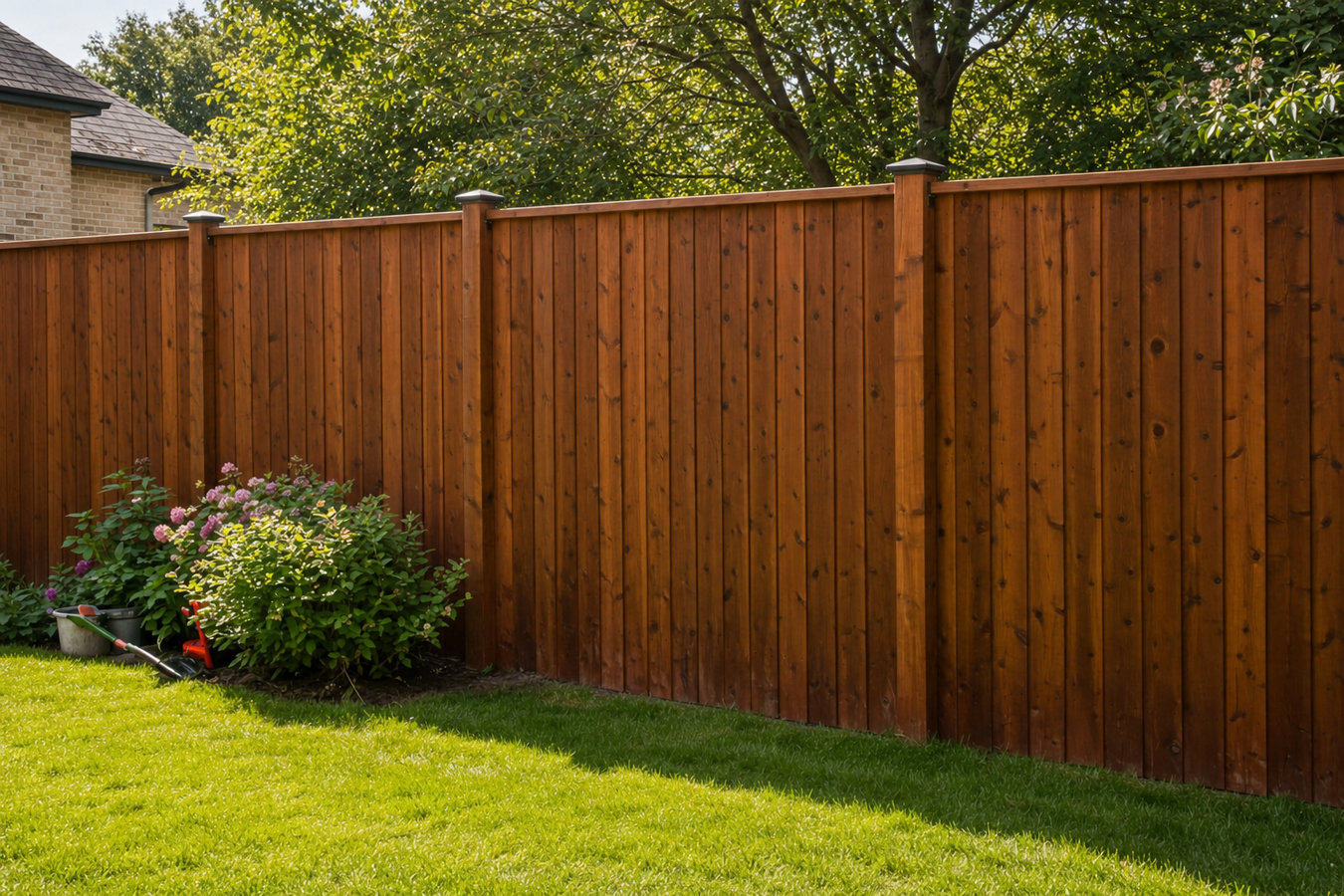
Sugar Land's clay soil and wet-dry seasons are hard on poorly installed wood fences. We set posts correctly for this ground, choose wood that holds up in Gulf Coast humidity, and take care of the permit and HOA paperwork before we ever break ground.
Wood and privacy fence installation in Sugar Land means building a six-foot cedar or treated pine barrier with posts anchored in concrete for Fort Bend County clay soil, with most standard residential jobs completed in one to two days once the permit is approved.
A wood fence is the most common choice for Sugar Land homeowners who want a full privacy barrier in the backyard. Cedar is the better performer in this climate - it naturally resists rot and insects and handles the humidity without the level of chemical treatment that pine requires. The trade-off is upfront cost, but for a fence that will be in place for 15 to 20 years with basic maintenance, that difference usually pays for itself. Sugar Land averages around 50 inches of rain per year, and wood that is not properly selected and finished will show its age quickly here.
If you are comparing wood to a lower-maintenance option, our vinyl fence installation service covers PVC fencing that requires virtually no upkeep. For homeowners building out a screened or covered outdoor space alongside the fence, our screened-in porches and screened decks service pairs well with a new privacy fence to create a fully enclosed outdoor area.
If you can see that fence sections are tilting, bowing outward, or the boards are separating from the frame, the posts have likely shifted. In Sugar Land, this is often caused by the clay soil expanding and contracting through wet and dry seasons - it is a common problem here and it tends to get worse, not better, on its own. A leaning fence is a structural failure, not a cosmetic one.
Boards that are soft to the touch, crumbling at the base, or showing deep cracks have lost their structural integrity. Sugar Land's humidity means rot can spread quickly once it starts - what looks like one bad board is often a sign that several nearby boards are compromised too. Graying is UV damage, and once it goes deep enough, boards are no longer worth staining.
Many Sugar Land homes, especially in newer sections of master-planned communities, are sold without a backyard fence already in place. If you have kids, pets, or simply want privacy from neighbors, installing a fence is usually one of the first projects new homeowners tackle - and getting it permitted and HOA-approved from the start avoids complications later.
If you feel like you are on display every time you step outside, a six-foot privacy fence solves that directly. This is especially relevant in Sugar Land's denser subdivisions where homes sit close together and backyards face each other with little natural screening. A properly installed privacy fence gives your outdoor space back to you.
Every job starts with a site visit - we walk your yard, measure the fence line, note any slopes or obstacles, and ask about your HOA requirements before writing the estimate. We handle the permit application with Sugar Land Development Services and confirm HOA compliance before any work begins. Posts are set in concrete to the depth required for Fort Bend County clay soil, not the national minimum that works in places without expansive ground. We call 811 before digging every time - Texas law requires it, and it protects your sprinkler system, gas lines, and other buried utilities.
We install cedar and treated pine privacy fences, picket styles, and board-on-board designs in heights from four feet up to six feet. For homeowners who want a fully enclosed outdoor space, our screened-in porches and screened decks service complements a new privacy fence for a backyard that feels completely private. For those who want a lower-maintenance alternative to wood, our vinyl fence installation service offers PVC options in the same styles and heights.
Best for homeowners who want the longest-lasting wood option in this climate - cedar naturally resists rot and insects, holds up in Sugar Land's humidity, and requires less maintenance than treated pine to keep looking good over a 15-to-20-year life.
Best for homeowners who want a wood fence at a lower upfront cost - treated pine performs well in Gulf Coast conditions when properly sealed and maintained, and it is the most common wood fence material in the Sugar Land area.
Best for maximum privacy with a classic look - alternating boards overlap slightly so there are no gaps from any angle, providing full visual screening while still allowing some airflow through the fence.
Best for any project that needs vehicle or foot access - single and double gates built to the same specification as the fence, with hardware that is sized to handle daily use and the weight of a solid wood gate in this humidity.
Sugar Land averages around 50 inches of rain per year and the summer humidity rarely lets up - that combination is genuinely hard on wood fencing that is not built for it. The heavy clay soil under most of Fort Bend County expands when it absorbs water and contracts when it dries, which puts constant lateral pressure on fence posts. A post set to the national minimum depth in this soil will start to heave and lean within a few seasons. We set posts deeper here than standard guidance calls for, and we use concrete footings sized for this specific ground condition. The result is a fence line that stays straight even after a wet summer followed by a dry fall.
The HOA landscape in Sugar Land is also more complex than in many Texas cities. Master-planned communities like First Colony and Telfair have detailed fence rules covering height, materials, stain color, and which direction the finished side must face. Getting those requirements confirmed before installation begins is not optional - an HOA violation can mean tearing out a completed fence at your expense. We know the rules in Sugar Land's major communities and confirm compliance before a post is dug. We serve homeowners across Fort Bend County, including Stafford and Missouri City, and the same permit and HOA processes apply throughout the area.
Contact us by phone or online and we will respond within one business day. We schedule a free visit to walk your yard, measure the fence line, note any slopes or obstacles, and ask about your HOA. You receive a written estimate that spells out what is included - materials, labor, permit fees, and removal of any existing fence.
We apply for the city permit through Sugar Land Development Services before any work starts, and handle HOA design review if your community requires it. The permit process typically takes a few business days to a couple of weeks. You do not need to track any of this - we confirm it is approved before we schedule the installation date.
The crew calls 811 to confirm underground utilities are marked, then digs the post holes, sets posts in concrete, and attaches the rails and fence boards. For a standard backyard, most of the visible work is completed in a single day. The crew hauls away all debris and any old fencing that was removed.
Before we leave, we walk the fence line with you to check that it is straight, boards are even, and gates open and latch properly. We also give you clear guidance on when to apply a sealant or stain - especially important before Sugar Land's rainy season - so the wood gets the protection it needs in the first weeks after installation.
No surprises on the invoice - we spell out every cost before work begins. Responses within one business day.
(281) 203-5105We set posts to a depth appropriate for Fort Bend County's expansive clay soil and anchor them in concrete to resist the seasonal ground movement that is just part of life here. That is the single biggest factor in a wood fence that stays straight versus one that starts leaning after the first wet season - and it is something you cannot see or check after the job is done. USDA Forest Products Laboratory guidance informs our wood selection and post performance expectations.
We know the fence requirements in Sugar Land's major planned communities - including First Colony and Telfair - and we confirm your HOA's specific rules before designing the job. Getting HOA approval in writing before installation begins protects you from the costly outcome of a fence that has to be torn out and redone. This is not an extra step for us; it is just how we do the job.
We recommend cedar as the primary material for Sugar Land installations because it naturally resists rot and insects in high-humidity climates - no additional chemical treatment required to get performance here. For homeowners with tighter budgets, we use quality treated pine with clear guidance on the maintenance schedule it needs to hold up in this climate. We do not install materials we would not stand behind.
We give you a written estimate that itemizes materials, labor, permit fees, and removal of any existing fence before you sign anything. If something comes up during the job that would change the cost, we discuss it with you before doing the work. The price you agreed to is what you pay - that transparency is a basic expectation we hold ourselves to on every project.
Post depth, wood selection, HOA compliance, and upfront pricing are not selling points - they are the minimum standard for a fence job done right in Sugar Land. That is how we approach every project, and it is why homeowners in this area call us back for the next one.
Screened outdoor spaces that pair naturally with a new privacy fence to create a fully enclosed backyard area for year-round use.
Learn MorePVC privacy and picket fence options for homeowners who want the same enclosed look as wood without the ongoing staining and sealing maintenance.
Learn MorePermit slots fill up fast in spring - lock in your installation date before the rush and get your backyard ready for the season.