
Loading...
Serving Sugar Land, TX and surrounding areas. (281) 203-5105
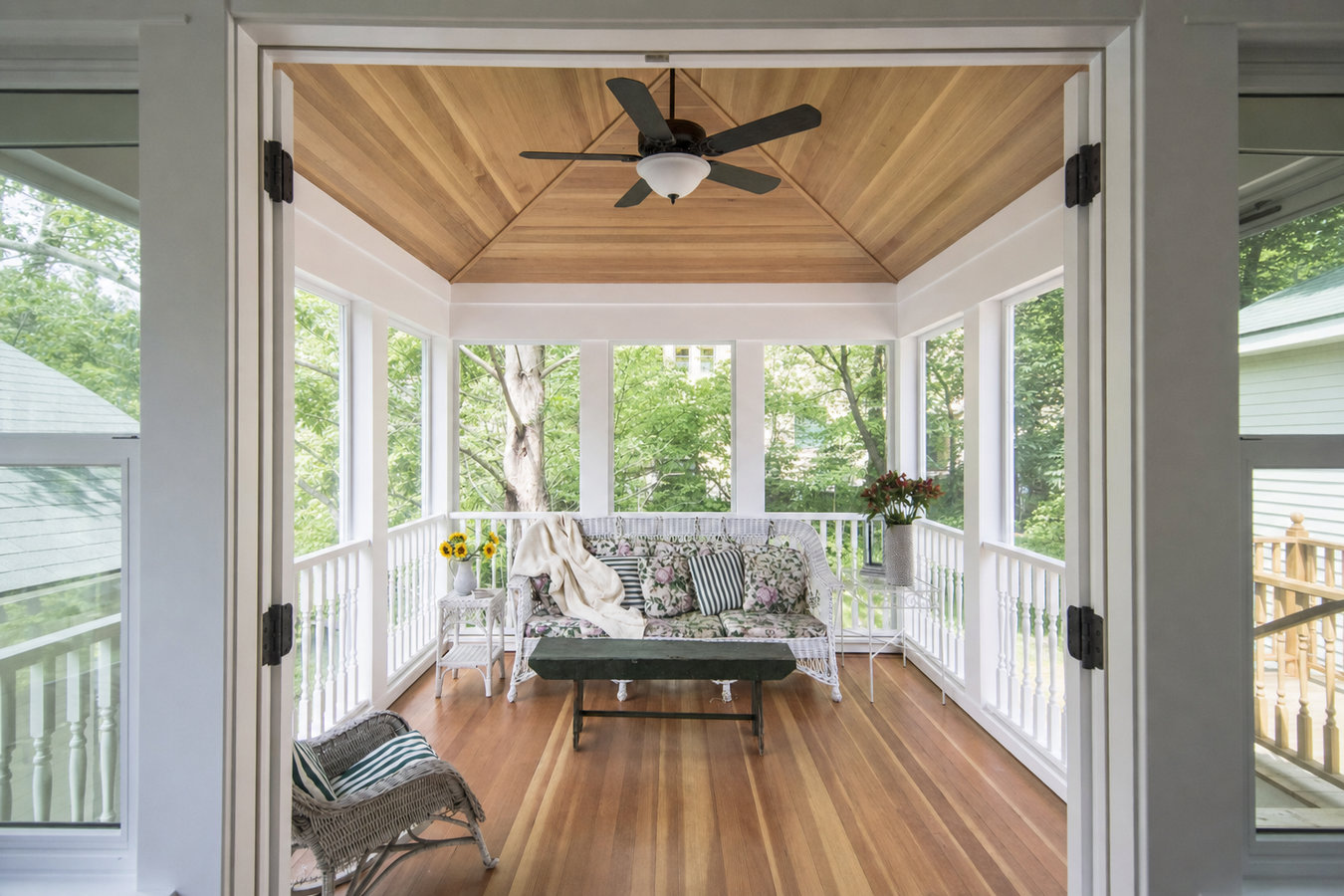
Sugar Land mosquito season runs April through October. We build screened enclosures that seal at every corner and door edge, handle the city permit and HOA submission, and anchor the structure for Fort Bend County clay soil.
Screened-in porches and screened decks in Sugar Land are outdoor enclosures with mesh screening on the sides and a solid roof overhead, letting in fresh air while keeping out insects and debris - most enclosure projects on an existing deck are completed in one to two weeks of construction once permits are approved.
In Sugar Land, a screened porch is less a luxury and more a practical solution. Fort Bend County ranks among the most mosquito-active counties in Texas, and most homeowners here find that an open deck sits empty from April through October. An enclosed space with proper screening changes how you actually use your home - evenings outside with the family, morning coffee without bug spray, a place the kids or dogs can be without wandering the yard.
If you want shade and rain protection in addition to bug control, our covered decks and patio covers service handles solid roof structures. For open-air shade with a decorative structure, our pergola installation service is a popular complement to screened enclosures on larger lots.
If your outdoor furniture sits unused from April through October because the mosquitoes make it unbearable at dusk, that is the clearest sign a screened enclosure would change how you use your home. Sugar Land's proximity to Oyster Creek and the area's warm, wet summers create ideal conditions for mosquitoes. No amount of citronella or spray makes an open deck genuinely comfortable once the sun goes down.
Sugar Land summers regularly push into the upper 90s, and an open deck with no shade or airflow is unusable by mid-morning on many days. A screened porch with ceiling fans and solar-shade screening can extend your comfortable outdoor season by several months in both directions. If you find yourself wishing you could sit outside but always retreating inside, that is a signal this addition would get real use.
If you want your kids or dogs to be able to play outside without constant supervision near the street or fence line, a screened porch gives them a contained, protected space. Pet-resistant screening options hold up to claws and rough contact, and the enclosed structure keeps small children from wandering. This is one of the most common reasons Sugar Land families with young children add a screened enclosure.
If you notice a gap forming between your deck and your home's exterior wall, or if deck posts look like they have shifted slightly out of plumb, Sugar Land's expansive clay soil may be at work. This kind of movement is worth addressing before you invest in a screened enclosure - building on top of a compromised deck structure costs more to fix later. A good contractor will assess the existing deck honestly before quoting the enclosure.
Every screened enclosure project starts with a site visit where we assess your existing deck or yard area, measure the space, and talk through your options - screening material, roof style, door placement, and orientation relative to the afternoon sun. We handle the city permit application with Sugar Land Development Services and, if your neighborhood requires it, help you put together the HOA architectural review submission. Footings and post connections are designed for Fort Bend County's heavy clay soil, not the national minimum that works in drier parts of the country.
We build both attached enclosures and freestanding screened structures, and we offer a range of screening materials suited to Sugar Land's climate. If you want to extend the project to include a solid overhead cover without screening, our covered decks and patio covers team can work alongside the screened enclosure build. Homeowners looking to add a decorative structure on the same lot should also ask about our pergola installation options, which pair well with screened porches on larger properties.
Best for homeowners who want a direct connection from the house to the screened space - the roof ties into the home's existing roofline, and you walk out from a door directly into the enclosure.
Best for homeowners who already have a deck platform and want to enclose it with screening and a roof - adds bug protection and weather coverage to an existing outdoor space without a full rebuild.
Best for west- or southwest-facing porches in Sugar Land where afternoon sun is intense - this screening material blocks a portion of solar heat while still allowing airflow, making the space usable longer into the afternoon.
Best for households with dogs or active kids - a heavier-gauge screen that holds up to claws, rough contact, and repeated pressure far better than standard fiberglass mesh.
Sugar Land sits in Fort Bend County, which is consistently among the most mosquito-active counties in Texas because of its warm, humid climate and the presence of Oyster Creek and Brazos River floodplains nearby. For most homeowners here, a screened enclosure is the difference between actually using your outdoor space from spring through fall and abandoning it entirely. The same clay soil that affects fence and deck installations also affects screened porch foundations - post connections and footings need to be designed with local ground conditions in mind, or the structure will begin to shift as the soil expands and contracts through wet and dry cycles.
Sugar Land is also home to several large master-planned communities - Telfair, New Territory, First Colony, and Riverstone - where HOA architectural review is required before any exterior addition. Each community has its own standards for roof pitch, color, and materials, and the review process can take two to six weeks. We have completed screened enclosure projects throughout Fort Bend County, including in Sienna Plantation and Missouri City, and we know what the approval process looks like in each of those communities. The North American Deck and Railing Association (NADRA) sets industry standards for the kind of structural work that goes into a properly built screened enclosure.
Reach out by phone or through our contact form and briefly describe what you are envisioning - whether you have an existing deck and roughly how big the space is. We respond within one business day, and you do not need to have all the answers before the first conversation.
We visit your home to measure the space, look at the existing deck or yard area, and talk through your options in person - including which direction the porch faces and how the roof will attach. You leave this meeting with a clear sense of what is possible, what it will cost, and what the timeline looks like.
Before any work begins, we submit the city permit application to Sugar Land Development Services on your behalf. If your neighborhood has an HOA, we help you prepare the architectural review submission. This step takes two to six weeks depending on your HOA and the city's current review queue - it is the part that requires patience, and we keep you updated throughout.
Once permits are approved, the crew frames the walls and roof structure, installs the screening panels, hangs the doors, and completes any finish details. A city inspector signs off on the completed structure before we close out the permit, then we do a final walkthrough with you to confirm every panel is tight and every door latches and closes properly.
Free on-site estimate. We handle the city permit and HOA paperwork. No commitment required to get a written quote.
(281) 203-5105The heavy clay soil throughout Sugar Land expands and contracts with every rain cycle, and a porch that is not anchored correctly will start to show it within a few years. We design footings and post connections specifically for local soil conditions - not a generic depth that works in drier parts of the country.
We have completed screened enclosure projects in Telfair, First Colony, New Territory, and other master-planned communities across Sugar Land. We know what each HOA review committee looks for and can help you prepare a submission that does not get sent back for revisions - saving you weeks of back-and-forth.
Every screened porch we build goes through the City of Sugar Land permit process, with a city inspector reviewing the structure at key stages. This means you have an independent check on the work - and when you sell your home, the addition is on record as a permitted, inspected improvement.
A west-facing porch in Sugar Land can feel like a greenhouse by 3 p.m. if it is not designed with the afternoon sun in mind. We talk about your porch's orientation before finalizing materials and will recommend solar-shade screening, overhang design, and fan placement to keep the space genuinely comfortable - not just usable in the morning hours. The U.S. Department of Energy explains how solar shading reduces cooling loads in warm climates.
These details - soil-specific footings, HOA navigation, permits on file, and climate-aware design - are what separate a screened enclosure that stays tight and comfortable for 15 years from one that needs repairs in year three. Homeowners researching options sometimes compare it to a screened in patio, which follows the same structural principles. That is the standard we build to on every job in Sugar Land.
Solid roof structures that provide shade and rain protection over your outdoor space, built for Sugar Land's heat and storm season.
Learn MoreOpen-air overhead structures that add shade and a defined outdoor room without full enclosure - a popular complement to screened porches on larger lots.
Learn MoreSugar Land's spring booking season fills up fast - locking in your start date now means your enclosure is ready before mosquito season hits.